
Who Is a Good Candidate for Liposuction?
Realistic expectations are critical in cosmetic surgery. We tell all our patients that this is not Hollywood, where the star emerges after cosmetic surgery with a perfect body, looking 15 years younger in a stunning new outfit, and 20 more points on their IQ. Cosmetic surgery results take time to develop and they will not be perfect. We feel very confident, however, in being able to safely produce reliable, predictable improvements that our patients are very pleased with.
The Liposuction Procedure
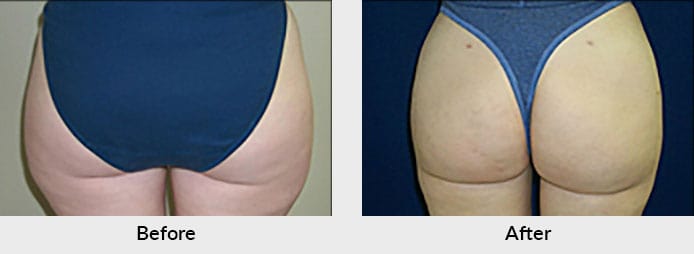
Traditional liposuction was first introduced decades ago and has had many changes and technical refinements along the way. The ideal patient for liposuction is someone within 10 to 15 pounds of their ideal body weight, with isolated areas of body fat that are resistant to diet and exercise. They should have good skin tone that can contract into the now smaller volume of fat and should have realistic expectations. If patients have none of the other qualifications, but have realistic expectations, they can still greatly benefit from liposuction. The reason liposuction is so popular is that it is safe and effectively removes fat from where it is not wanted and leaves fat alone where it is wanted. For instance, to get the same results of removing two pounds of fat from the abdomen using liposuction, one might have to lose twenty to thirty pounds from the entire body. Many people cannot lose twenty pounds, and if they did they might lose it from areas where they want to keep it such as their breasts or face. Liposuction allows us to selectively remove fat from exactly where we want it removed.
The current technique involves making 1 centimeter incisions in the creases around the periphery of the area to be suctioned. Even though the procedure is done under IV anesthesia, the area is infiltrated with high volumes of local anesthesia to provide both intense vasoconstriction and long-term postoperative anesthesia. The fat is then simply vacuumed out with specially designed cannulas. The process can be thought of as a type of body whittling or sculpting; hence, the name lipo-sculpture. The patients are placed in compressive garments postoperatively, and because of the local anesthetic, are discharged home in virtually no pain.
After Liposuction
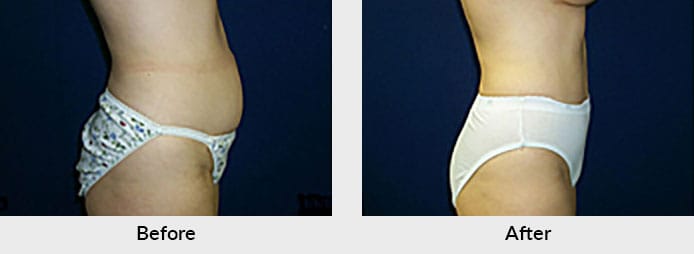
Patients are seen within 5 to 7 days at our Charlotte surgery center to check their progress and remove stitches. Most of our liposuction patients have surprisingly little bruising and may have such minimal discomfort that they are able to return to work within 2 to 3 days. In general, the more extensive the liposuction the longer the recovery time. The compressive garment is worn continuously for 3 to 6 weeks to limit swelling and ensure proper skin contraction. Patients are allowed to shower without the garment, beginning the second day postoperatively. Though improvements in body contour are noted immediately, the final results will take 2 to 3 months to be complete. Regular exercise may be resumed at 3 weeks.
Possible Liposuction Complications
Complications after liposuction are infrequent but include infection, bleeding, over-correction, under-correction, asymmetries, and skin irregularities. We try to remove just the right amount of fat to produce the desired improvement, but if we err, we always try to err on the conservative side. We can always take a little more fat in a minor touch-up procedure, but it is more difficult to put fat back into areas that have been over-resected.
Our non-surgical fat removal approach is with CoolSculpting, where the fat is frozen here in the office with no need for anesthesia and no incisions. You can expect as much as 22% fat reduction after one treatment and 40% after two treatments. After the procedure is done there is no downtime and minimal if any pain. As with liposuction, the results are visible in about 3 months.
Realistic expectations are critical in cosmetic surgery. We tell all our patients that this is not Hollywood, where the star emerges after cosmetic surgery with a perfect body, looking 15 years younger in a stunning new outfit, and 20 more points on their IQ. Cosmetic surgery results take time to develop and they will not be perfect. We feel very confident, however, in being able to safely produce reliable, predictable improvements that our patients are very pleased with.
VASER LIPOSUCTION
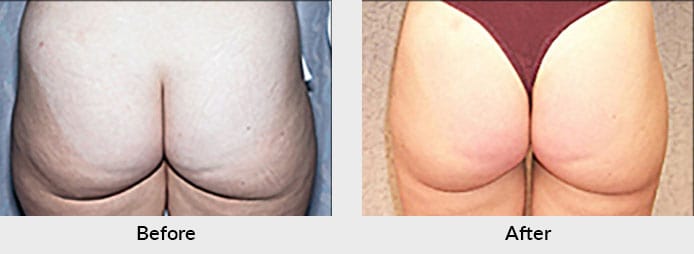
What Makes VASER Liposuction Different?
While traditional liposuction uses a cannula to break up fat cells so that they can be suctioned out, VASER liposuction takes a gentler approach. The treatment utilizes ultrasound energy to liquify the fat cells before suctioning them out.
This procedure makes it easier to create specific contours that are both attractive and natural looking. Since the ultrasound energy only liquifies the fat cells, the surrounding tissue is not at risk of being damaged during the process. VASER liposuction is an excellent choice for those candidates looking for body sculpting in specific areas.
VASER liposuction shortens the total procedure time, resulting in less swelling, bruising, and discomfort. Downtime after the procedure is shorter, so you can get back to the activities you care about sooner. Therefore, risks of Vaser Liposuction are generally less than those associated with traditional liposuction.
Who Is a Candidate for VASER Liposuction?
Most people who would be a good candidate for traditional liposuction can also be a good candidate for VASER liposuction. You may be an ideal candidate if you have committed to diet and exercise to lose weight but find that certain problem areas have persisted. VASER liposuction can treat areas including abdomen, hips, thighs, buttocks, back, chin, upper arms, chest and back.. Since the emulsified fat cells are gone forever, you can enjoy the cosmetic improvements indefinitely. Just keep in mind that gaining more weight will cause fat to be stored in other areas of your body. It is important to schedule a consultation with a board-certified cosmetic surgeon to see if Vaser or Traditional Liposuction is right for you.
Why Choose Dr. Robert Graper and Dr. Garrett Harper for Your Liposuction
Dr. Robert Graper and Dr. Garrett Harper have been performing liposuction for many years, providing excellent results to thousands of patients. If you are ready to rid yourself of stubborn body fat that has refused to go away despite exercise and a healthy diet, then it is time to consider a liposuction procedure with Dr. Graper or Dr. Harper. Read our patient reviews to see why many people believe Dr. Graper and Dr. Harper are some of the best liposuction surgeons in Charlotte.